Categories:
- A conference organized by Odilo shows that these sectors still have a lot of room for improvement compared to other areas.
Published by El Español
Culture and education are two sectors in which innovation and technological transformation are more difficult to apply because it is more difficult to objectively demonstrate their effectiveness and they are sectors that are deeply rooted in traditional processes.
In the different autonomous communities, and contrary to what happens in other areas, such as industry, health or agriculture – to give just three examples – it is more complicated to measure impacts that generate positive results. But obviously, as is often the case when innovation is applied, improvement exists.
In fact, we are increasingly seeing small revolutions in educational and cultural centers that have a clear objective: to reduce gaps and improve the services provided.
That has been the main argument of a conference held in Madrid in which various representatives of various regional public administrations have reflected on this issue.
The framework discourse of the conference is indisputable: innovation applied to the social and cultural sphere is consolidated as a key tool for improving accessibility, inclusion and efficiency of public services, in a context in which administrations work hand in hand with the private sector to reduce gaps and guarantee equitable access to resources and opportunities.
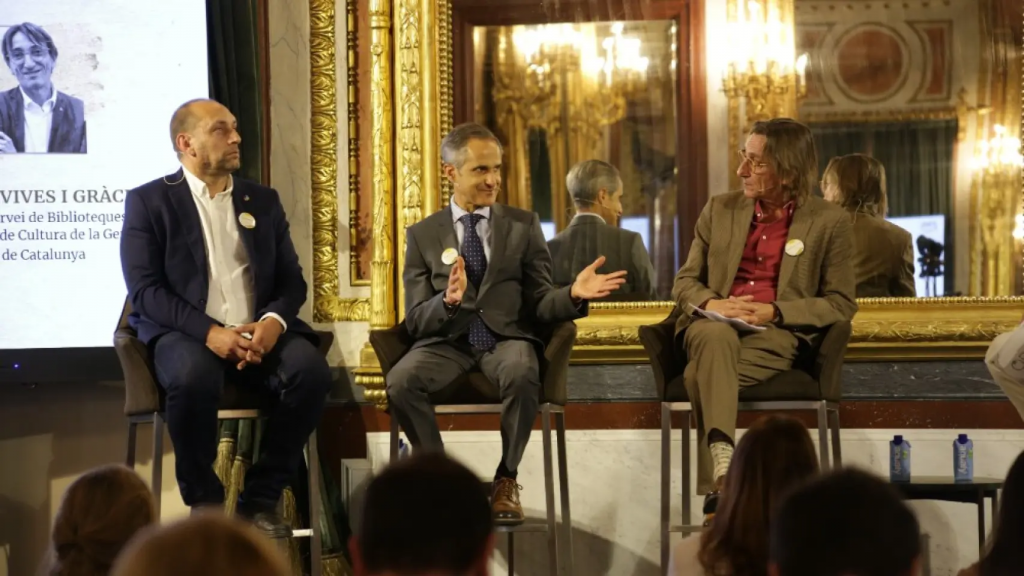
This was made clear during the round table ‘Maximising the social impact of Public Administrations’, held within the framework of the III Conference on Challenges of Public Administrations in Innovation and Training, organised by ODILO in collaboration with AWS.
In the words of Sarah Harmon, CEO of Odilo, “the challenge on the table is not to digitize, but to generate a real impact. Technology has never been the goal. It’s the people. Public innovation makes no sense if it does not serve to make life easier for citizens, with more accessible and personalized services.”
The debate brought together Pedro Mondéjar Mateo, general director of Attention to Diversity of the Ministry of Education and Vocational Training of the Region of Murcia; David Vicente Ninou, director of Digital Andorra of the Government of Andorra; and Josep Vives i Gracia, head of the Libraries Service of the Department of Culture of the Generalitat de Catalunya.
During the meeting, Mondéjar stressed that inclusion is a structural challenge for today’s society and stressed the need to move beyond the concept of formal equality to build true policies of social cohesion and educational integration.
“For society it is a challenge to be inclusive”, he said, insisting that “it is not enough with equal opportunities, but with working on social cohesion and educational integration”.
In this sense, David Vicente Ninou, from Andorra Digital, explained Andorra Digital’s approach to the development of people-centred public services, combining collaboration between administrations, the private sector and technological agents with the guarantee of fundamental rights.
Collaboration, key
“We work with the Public Administration, the private sector, technological enablers, and the fundamental rights and principles of people and their competencies,” he said.
In this context, he highlighted the creation of a digital wellbeing and digital skills centre aimed at guaranteeing minimum skills for all citizens, with the aim of reducing the digital divide and ensuring equitable access to digital public services. “It makes no sense to put services that cannot be used,” he said, stressing the need to accompany technological transformation with citizen training processes.
He also insisted on the importance of constant adaptation to technological change as a structural element of public innovation, pointing out that “technology is a means” and that the challenge for administrations is to “take the best of each technology” to improve the quality of public services and their impact on citizens.
From the cultural field, Josep Vives i Gracia, from the Generalitat de Catalunya, highlighted the historical role of libraries as spaces for access to knowledge and social cohesion, highlighting their evolution thanks to digitalisation. “The library has always played an essential role. It has been much more than making resources available to citizens,” he said.
In this sense, he remarked how technology has made it possible to expand access to culture to groups that previously encountered barriers, such as people with visual disabilities, who can now continue to access reading thanks to new digital formats. He also highlighted initiatives such as Bibliodigital, a service that offers access to books, music and documentaries without ads through the library card, reinforcing the concept of universal access to culture.
For her part, Ainhoa Marcos, VP of Public Sector and Education at ODILO, said that “if we have learned anything in these years, it is that the great challenges we face cannot be solved in isolation. We need collaboration. We need to share knowledge. And we need to build bridges between the public and private sectors to promote projects that really generate an impact on people’s lives.”
With this purpose, the III Conference on Challenges of Public Administrations in Innovation and Training of ODILO has been consolidated as a meeting space between institutional leaders in the field of education, employment and social impact.