Categories:
Interview published by El Publicista
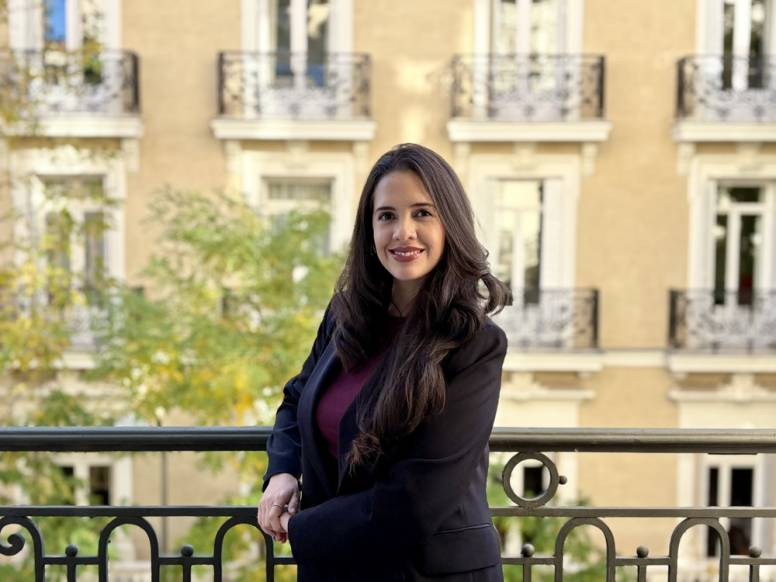
María Gracia Banderas has built a career marked by the conviction that communication has a transformative power when it connects innovation, purpose, and education. Her professional journey reflects a deeply humanistic vision of the impact that technology can generate when placed at the service of learning. Today, she leads global communication for Odilo, a Spanish edtech with a presence on five continents, from where she advocates for inclusive leadership and a narrative capable of bringing the educational future closer to millions of people. Banderas summarizes a journey where vocation, commitment to equality, and a strategic view of the role of communication in digital learning converge.
How did you get into the world of communication, and what attracted you to the educational and technological environment?
From a very young age, I was passionate about telling stories with impact, which led me to train in journalism and communication. I have always believed that communicating is one of the most powerful ways to connect people, ideas, and purposes. The edtech sector captivated me because it combines innovation, purpose, and the ability to generate social change. At Odilo, I can work right at that intersection: communicating how continuous learning drives equity, how technology expands possibilities, and how every message can bring millions of people closer to new ways of learning.
What inspires you today in your work at a company with a global educational impact?
I am inspired by seeing how learning becomes personal and collective progress. At Odilo, we work with governments, universities, and companies that share a common purpose: creating real opportunities. I am also inspired by the challenge of communicating educational innovation in a clear, human, and approachable way.
Have you ever felt that being a woman has made it harder to advance in your career?
Although the sector maintains structural inertias that affect many women, in my experience, I have not encountered direct barriers. I have worked in environments where meritocracy, diversity, and collaboration were part of the culture. Even so, I am aware that not all women start from the same context, and that is why it is crucial to continue promoting spaces where our voices have real weight.
What female role models have accompanied or inspired you in your professional development?
My mother and my grandmothers have been absolute role models: resilient, intelligent, and hardworking. Professionally, I am inspired by colleagues who lead with empathy, creativity, and rigor. They are a reminder that there is no single leadership style and that a diversity of perspectives enriches teams.
What can the sector do to foster more female leadership in strategic and international roles?
Create environments where women have visibility, autonomy, and access to real opportunities. Female leadership is driven by horizontal structures, effective mentoring programs, robust work-life balance policies, and a culture that values diversity as an engine for innovation. It is also key to promote the presence of women in international forums and decision-making spaces.
Odilo has been recognized by TIME and Statista as the top Spanish edtech. What explains this growth?
A combination of innovation, global vision, and adaptability. Our model transforms the way people learn in a unique digital environment, impacting institutions across five continents. The combination of technology, top-tier content, and a team committed to education as an engine of change has been key to reaching 170 million users.
Personalized education is transforming training. How is Odilo positioned?
Our AI technology recommends content, analyzes profiles, and offers hyper-personalized learning paths. We transform training into a strategic asset. We also empower each institution to own its training environment, driving continuous and dynamic learning.
What role does communication play in a global company with millions of users?
It is a unifying element. It manages diverse cultural realities and ensures coherence and clarity. Communication anticipates risks, detects opportunities, and builds relationships of trust with institutions, governments, and the media. Our duty is to translate technology into human benefits and show how it transforms talent into a competitive advantage.
How do you perceive the level of educational innovation and marketing in Spain compared to other countries?
Spain is innovative, although it is not yet among the most cutting-edge countries. It ranks 29th in the Global Innovation Index and is a “moderate innovator” in the European Innovation Scoreboard. Even so, there are pioneering initiatives and growing dynamism. From a global perspective, Spain has solid foundations and enormous potential if it accelerates technological innovation and public-private collaboration.
What challenges do you find in communicating to audiences as diverse as governments, schools, and businesses?
The main challenge is the plurality of languages: each audience has different priorities, but the essence must be maintained. Another challenge is credibility: we must communicate with rigor, based on evidence, measurable results, and transparency.
How important is brand reputation in the edtech sector?
It is a critical asset. Institutions only trust providers that guarantee security, pedagogical impact, and continuity. We build reputation with consistency, measurable results, international presence, transparency, and a narrative connected to our purpose.
What trends will mark the future of digital learning?
Three main lines: hyper-personalization with ethical AI, a frictionless omnichannel experience, and a growing focus on power skills. Leading companies will be those that connect cutting-edge technology with a human and transformative purpose.